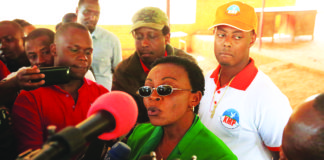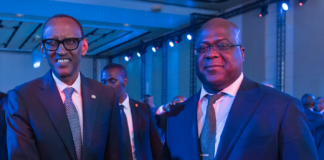

If Rwanda’s three viable opposition parties are allowed to register and participate in free and fair elections, they have a good chance, in coalition, of defeating Rwandan President Paul Kagame and his ruling Rwandan Patriotic Front (RPF) Party. Those three parties condemned the Feb. 19 deadly grenade attacks in Kigali, calling them “an attempt to instill fear in the population” prior to Rwanda’s August presidential election.
Tags:
1994 Rwanda Genocide,
Africa and the World,
American and European Greens Federations,
Amnesty International,
Ann Garrison,
autocratic rule,
BBC,
Bernard Ntaganda,
British Prime Minster Gordon Brown,
Canadian Prime Minister Stephen Harper,
Commonwealth Heads of Government,
Commonwealth Human Rights Initiative Group,
crimes against humanity,
David Barouski,
Democratic Republic of Congo,
Derek Ingram,
disputed history of the 1994 genocide,
Double Genocide Theory,
Frank Habineza,
genocide,
Genocide denial,
genocide ideology,
George Bush,
Global Citizenship Award,
Global Greens,
Green Parties worldwide,
grenade attacks,
human rights violations,
Human Rights Watch,
Hutu,
Hutu ethnic group,
interahamwe,
International Medal of P.E.A.C.E.,
Keith Harmon Snow,
Kenyan judge and legal scholar Yash Pai Ghai,
Kigali,
Kigali’s Gasabo District,
Le Parti Social Imberakuri,
Pastor Rick Warren,
Permanent Consultative Council of Opposition Parties in Rwanda,
political repression,
President Bill Clinton,
President Paul Kagame,
pretrial detention,
Rwanda,
Rwanda Chamber of Deputies,
Rwanda New Times,
Rwanda News Agency,
Rwandan government,
Rwandan Minister of Internal Security Sheikh Mussa Fazil Harerimana,
Rwandan Patriotic Front (RPF) Party,
Rwanda’s August presidential election,
Saddleback Church,
Secretary of State Hillary Clinton,
Senegalese Green Party President Papa Meissa Dieng,
terrorism,
The Democratic Green Party of Rwanda,
Truth and Reconciliation Commission,
Tutsi,
U.S. State Department’s Bureau of Democracy and Labor,
United Democratic Forces – Inkingi,
University of Michigan Professor Allan Stam,
Victoire Ingabire Umuhoza,
war crimes

As global awareness grows around the Congo and the silence is finally being broken on the current and historic exploitation of Black people in the heart of Africa, a myriad of Western based “prescriptions” are being proffered. Most of these prescriptions are devoid of social, political, economic and historical context and are marked by remarkable omissions. The conflict mineral approach or efforts emanating from the United States and Europe are no exception to this symptomatic approach which serves more to perpetuate the root causes of Congo’s challenges than to resolve them.
Tags:
Africom,
AngloGold Ashanti,
Anvil Mining,
Assistant Secretary of State for African Affairs Herman Cohen,
Banro,
Blattner Elwyn Group,
Bodia Macharia,
Canadian Bill C-300,
Carter Center,
cassiterite,
CNDP,
coltan,
conflict minerals,
Congo,
counterinsurgency,
Eagle Wings/Trinitech,
FDLR,
First Quantum,
FreePort McMoRan,
Group of Experts,
International Court of Justice,
Joseph Mobutu,
Kagame regime,
Kambale Musavuli,
Kemet,
Kivu provinces,
Laurent Nkunda,
Lundin,
Museveni,
Obama administration,
OM Group,
Patrice Lumumba,
Paul Kagame,
Rwanda,
Southern Africa Resource Watch,
Traxys,
tungsten,
Uganda

Coltan is a mineral necessary for making electronic things work – like cellphones, ipods, PS3s and laptops. Over 6 million Congolese have been murdered to assure that the corporations and governments involved have a corner on the market for the minerals that the Congo produces. This is “Break the Silence” Congo Week. Check out the events and get involved!
Tags:
Afghanistan,
Africa and the World,
Africom,
Alabama,
Ambassador Shirley Barnes,
America,
Australia,
Belgium,
Bill Clinton,
Break the Silence Week,
British governments,
Canada,
China’s growing influence,
Clinton,
coltan reserves,
Congo Week,
Costa Rica,
Darfur,
Doctors Without Borders,
Dr. Yvonne Seon,
Elombe Brath,
former Congresswoman Cynthia McKinney,
Friends of the Congo,
George Bush,
George Washington Williams,
Ghana,
Hillary Clinton,
Hurricane Katrina,
Iraq,
Ireland,
ivory extraction,
Japan,
Jim Hope,
Kambale Musavuli,
King Leopold II,
Kosovo,
Maria Fearing,
mineral wealth,
Minister of Information JR,
multinational corporate and government,
New Orleans,
Obama,
one-hour global cell out,
Patrice Lumumba,
Paul Kagame,
POCC: Block Report Radio,
rape,
Romania,
rubber,
Rwanda,
Sean Bell,
sexual violence,
South Africa,
Sweden,
Talladega College,
the African Business Summit,
the Berlin Congo Conference,
the Democratic Republic of Congo,
the North Carolina Agricultural and Technical State University,
the Patrice Lumumba Coalition,
the SF Bay View newspaper,
the Tsunami in Asia,
the U.S.,
the United States,
Tshiluba,
Uganda,
Under-Secretary-General for Humanitarian Affairs and Emergency Relief Coordinator Jan Egeland,
United Kingdom,
William Henry Sheppard,
World War II,
“Break the Silence”

One hundred years ago, a global outrage surrounding the death of an estimated 10 million Congolese resulted in the end of King Leopold II of Belgium’s rule in the Congo. Ordinary people around the world from all walks of life stood at the side of the Congolese and demanded the end of the first recorded Congolese holocaust. A century later, the world finds itself facing the same issue, where the Congolese people are subjected to unimaginable suffering.
Tags:
Africans,
Antonio Guterres,
automobile,
Black people,
Cabot Corp.,
cell phones,
Charity,
cobalt,
coltan,
Congo,
Congo Week,
Congolese holocaust,
copper,
corporate interests,
diamonds,
Eagle Wings,
electronics,
foreign governments,
Former South African president Thabo Mbeki,
Frantz Fanon,
FreePort McMoRan,
Friends of Congo,
geo-strategic battles,
geo-strategic minerals,
gold,
humanitarian industry,
Japan,
justice,
Kambale Musavuli,
Kemet Electronics,
King Leopold II,
Kwame Nkrumah,
local elites,
media caricatures,
military,
misrepresentation of Africans,
multi-lateral institutions,
multi-national corporations,
natural resources,
New Zealand,
OM Group,
poverty,
Rwanda,
technology,
the Congressional Budget Office,
the devaluation of Black lives,
the Financial Times,
the humanitarian industry,
the mainstream media,
the pilfering of Congo’s wealth,
the United States,
tin,
tungsten,
U.S. aerospace,
U.S. business interest,
U.S. corporate foreign policy interests,
Uganda,
Undersecretary General for Humanitarian Affairs and Emergency Relief Coordinator Jan Egeland,
uranium,
Western economic and military dominance,
World War II,
“Challenge of the Congo”,
“Final Report of the Panel of Experts on the Illegal Exploitation of Natural Resources and Other Forms of Wealth of the Democratic Republic of the Congo”

One is hard pressed to find media accounts of what the Congolese people want or how they believe that the United States could best play a constructive role in ending the suffering in the Congo. Considering that the United States has played a significant historical role in the stifling of the democratic aspirations of the Congolese people and the backing of the 1996 and 1998 invasions of the Congo by its allies, Rwanda and Uganda, which unleashed what the United Nations say is the deadliest conflict in the world since World War II, it is important to hear directly from the Congolese people regarding U.S. engagement in the Congo.
Tags:
American and Western firms trafficking in mineral resources,
Baraka,
Bibokoboko,
Bijombo,
bilateral cooperation,
Bosco Ntaganda,
Bukavu,
Bunyakiri,
Bwegera,
cassiterite,
Central Africa,
Congolese people,
diamonds,
disease,
evil destruction of property and infrastructure,
famine,
Fizi,
Friends of the Congo,
gold,
Hon. Bapolisi Bahuga Paulin,
Hon. Bashomberwa Martha,
Hon. Birindwa Chanikire Solide,
Hon. Bitakwira Hayi Bihona-Justin,
Hon. Buherwa Lupini Désiré,
Hon. Kanyegere Lwaboshi Samuel,
Hon. Marie-Jeanne Kika Zamud,
Hon. Masumbuko Bashomba Christophe,
Hon. Mpanano Ntamwenge Roger,
Hutus,
international justice (ICC),
Israel,
Kagabwe,
Kakungwe,
Kalambi,
Kalonge,
Kamituga,
Kaniola,
Kasika Katogota,
Katumba Kalehe,
Kaziba,
Kigulube,
Kiliba,
Kinshasa,
Kitutu,
large-scale movements of populations,
Laurent Nkundabatware,
Lemera,
looting of natural resources,
Lubuga,
Lugushwa,
Luhwindja,
Makobola,
Masango Tubimbi,
Minembwe,
MONUC (United Nations Organization Mission in DR Congo),
Mushago,
Mutambala,
Mwenga,
National Members of Parliament of South Kivu,
Ndola,
Ngando,
Nindja,
Palestine,
President Barack Obama,
President Paul Kagame,
rape,
Rwanda,
Secretary of State Hillary Clinton,
Shabunda,
Sun City in South Africa,
the Conference of Goma,
the DR Congo,
the geostrategic position,
the Marshall plan,
the National Parliament,
the Obama administration,
the United States of America,
theft and other degrading treatment,
Tutsis,
Uganda,
Uvira,
“blood” coltan

“We applaud your focus on the horrors of the conflict in the Congo by addressing sexual and gender based violence; however, such violence against women is a direct result of the resource war. The United States can play a key role in bringing an end to the conflict,” Friends of the Congo wrote to Secretary of State Hillary Clinton.
Tags:
Canada,
Congo,
Friends of the Congo,
Kenya,
Nairobi,
OECD (Organization for Economic Co-operation and Development) guidelines,
Rwanda,
Secretary Clinton,
sexual and gender based violence,
Sweden,
the Carter Center,
the Congo,
The Netherlands,
the U.S. Embassy,
the United States,
Uganda,
United Nations

Kambale Musavuli, national spokesperson and student coordinator for Friends of the Congo, in this interview by POCC Minister of Information JR, challenges the people of the U.S. and President Obama to stop the resource wars in the Congo that have killed 6 million people, half of them children, for minerals like the coltan that powers our cell phones and almost everything electronic.
Tags:
Africa and the World,
Black Dot Café,
Blackberry,
cell phones,
coltan,
Congo,
Congo Independence Day,
Flashpoints,
Friends of the Congo,
Kambale Musavuli,
KPFA,
POCC Minister of Information JR,
President Obama,
Rwanda,
Uganda

We now know where a lot of coltan and cassiterite stolen from Congo go, in the end. They go to Ghana and other parts of Africa as toxic electronic waste, often disguised as charity: European and North American “contributions” of worn-out, broken, no longer fashionable tech garbage.
Tags:
Ann Garrison,
cassiterite,
coltan,
conflict minerals,
Democratic Republic of Congo,
Greenpeace,
North Kivu Province,
President Barack Obama,
Rwanda,
Rwandan President Paul Kagame,
toxic electronic waste,
U.S. Africa Command (AFRICOM),
U.S. Army Gen. William "Kip" Ward

The recent UNHCR Gimme Shelter campaign uses the iconic Rolling Stones song and Hollywood star Ben Affleck’s video of suffering in Congo as a propaganda tool to peddle the international catastrophe of Western aid, intervention, plunder and depopulation in Central Africa.
Tags:
"wildlife conservation" enterprises,
Alison Des Forges,
Amnesty International,
Banro Corp.,
Ben Affleck,
brutalized,
CARE International,
Congo,
Dan Gertler,
Daryl Hannah,
death camps,
depopulation,
diamond cartels,
Dian Fossey Gorilla Fund,
disenfranchised,
Ewan McGregor,
Forces for the Democratic Liberation of Rwanda,
Gen. Laurent Nkunda,
genocide,
George Forrest,
International Criminal Tribunal on Rwanda (ICTR),
International Crises Group,
International Rescue Committee,
Jane Goodall Institute,
John Bredenkamp,
Keith Harmon Snow,
Lockheed Martin Corp.,
Lord's Resistance Army,
Louis Michel,
Maurice Tempelsman,
Mia Farrow,
modern day slavery,
MONUC Public Information Office (PIO),
Moto Gold,
Natalie Portman,
National Congress for the Defense of the People (CNDP),
North Kivu,
Oxfam,
Philipe De Moerloose,
plunder,
President Bill Clinton,
President Juvenal Habyarimana,
PricewaterhouseCoopers International (PWC),
Raise Hope for Congo,
refugees,
Rwanda,
Rwandan Patriotic Army,
Rwandan Patriotic Army (RPA),
Rwandan President Paul Kagame,
Sam Jonah,
Save the Children,
Sudan,
Titanium Resources Group,
U.N. "peacekeeping" mission,
U.N. Office for the Coordination of Humanitarian Affairs (OCHA),
Ugandan People's Defense Forces' (UPDF),
UNHCR,
United Nations Development Program (UNDP),
United Nations Observers Mission for Congo (MONUC),
uprooted,
Vangold Resources,
Walter Kansteiner,
Yoweri Museveni

When opportunity presented itself in the form of widespread warfare in the Democratic Republic of the Congo, Zimbabwean military leaders were quick to provide troops in exchange for permission to establish Zimbabwean corporations to exploit Congolese raw materials.
Tags:
Air Commodore Mike Tichafa Karakadzai,
Air Marshall Perence Shiri,
Brigadier General Sibusiso Busi Moyo,
Burundi,
Colonel Simpson Sikhulile Nyathi,
Colonel Tshinga Dube,
Congo gold and diamonds,
Democratic Republic of Congo,
DRC President Laurent Kabila,
economic "structural adjustments",
Economic Structural Adjustment Program (ESAP),
elites,
Emmerson Dambudzo Mnangagwa,
General Vitalis Musunga Gava Zvinavashe,
Jean Damu,
John Mikembe,
Joint Operations Command,
Joseph Kabila,
Morgan Tsvangirai,
Movement for Democratic Change (MDC),
National Security Council,
personal enrichment of military leaders,
political elite,
Reserve Bank of Zimbabwe,
Rhodesia,
Rwanda,
Sidney Sekeramayi,
Solomon Mujuru (aka Rex Nhongo),
Thamer Bin Said Ahmed Al-Shanfari,
Uganda,
wealth accumulation,
Western economic sanctions,
ZANLA Deputy Commander Solomon Mujuru,
ZANU-PF,
Zimbabwe African National Liberation Army (ZANLA),
Zimbabwe Executive Vice President Grace Mujuru,
Zimbabwean President Robert Mugabe

I recently received a phone call from an investigator for the prosecutor at the International Criminal Court, and I shared my uncertainty about the ethics of collaborating with an “International Criminal Court” that was only indicting Black Africans.
Tags:
Action Contre la Faim,
Al-Shifa Pharmaceutical factory,
Alex de Waal,
Alison Des Forges,
Anthony Lake,
Association of Banyarwanda in Diaspora USA,
CARE,
Center for American Progress,
Center for Security Policy,
CHF International,
Clinton administration,
Congo,
copper,
crimes against humanity,
Darfur,
Darfur Genocide Accountability Act,
declaration of genocide,
Eric Reeves,
fertile plantation lands,
Foundation for the Defense of Democracy,
George W. Bush,
gold,
Henry Kissinger,
Hillary Clinton,
human rights violations,
Human Rights Watch,
humanitarian,
Hutu,
International Conference on the Status of Banyarwanda (Tutsi) Refugees,
International Criminal Court (ICC),
International Crises Group,
International Rescue Committee,
Israel,
Israeli-backed Justice and Equality Movement (JEM),
Janjaweed,
John Podesta,
John Prendergast,
Keith Harmon Snow,
Lockheed Martin Corp.,
Lord's Resistance Army,
Madeleine Albright,
Mercy Corps,
Mombasa,
Mossad,
MSF-Holland,
MV Faina,
non-governmental organizations (NGOs),
Omar al-Bashir,
Oxfam,
petroleum,
President Barack Obama,
President Paul Kagame,
President Yoweri Museveni,
Prudence Bushnell,
Rakiya Omaar,
Roger Winter,
Rwanda,
Rwandan Defense Forces (Rwandan Patriotic Army),
Rwandan President Habyarimana,
Rwandan Tribunal (ICTR),
Rwandan Tutsi Diaspora,
Samantha Power,
SAVE DARFUR movement,
Save the Children,
Solidarites,
Somali "pirates",
Somali fishermen,
Sudan,
Sudan Liberation Army,
Sudan People's Liberation Army (SPLA),
Susan Rice,
the International Rescue Committee,
the Norwegian Refugee Council,
Timothy Longman,
U.S. Committee for Refugees,
U.S. proxy forces,
Uganda,
Uganda People's Defense Forces (UPDF),
uranium,
Vadim Alperin,
war crimes,
warlords

Cobalt is essential to our military industries’ ability to manufacture the modern weapons of war. So, the Congo War, a.k.a. the African holocaust, is a war for the sake of war itself.
Tags:
African holocaust,
African proxy armies,
African World War,
Ann Garrison,
Barack Obama,
Blue Angels,
cobalt,
coltan,
Congo,
Congo War,
Congolese Army (FARDC),
Congrès National pour la Défense du Peuple (CNDP),
Forces Democratique de Liberation du Rwanda (FDLR),
Katanga Copper Belt,
Lord's Resistance Army (LRA),
Patrice Lumumba,
President Patrice Emery Lumumba,
Robert Gates,
Rwanda,
Rwandan Defense Forces (RDF),
U.N. peacekeepers (MONUC),
Uganda,
Ugandan army (UPDF)

The December 2008 United Nations report is the latest in a series of U.N. reports dating from 2001 that clearly documents the systematic looting and appropriation of Congolese resources by Rwanda and Uganda, two of Washington and London’s staunchest allies in Africa.
Tags:
Add new tag,
African Union,
British Prime Minister Tony Blair,
Burundi,
CNDP,
Congo,
Congolese people,
deadliest conflict in the world,
Dr. Clet Niyikiza of GlaxoSmithKline,
East African free trade zone,
eastern Congo,
FDLR,
former President Bill Clinton,
French President Nicholas Sarkozy,
Gen. Jean Bosco Ntaganda,
Gen. Laurent Nkunda,
Herman Cohen,
human rights abuses,
International Court of Justice,
International Criminal Court,
Joe Ritchie,
Kagame's Presidential Advisory Council,
Kambale Musavuli,
National Congress for the Defense of the People (CNDP),
reparations,
Rev. Rick Warren,
Rwanda,
Rwanda Development Board,
Rwandan Investment Group,
Scott Ford of Alltell,
Southern African Development Community (SADC),
Tanzania,
the Rwandan Investment Group,
Tribert Rujugiro Ayabatwa,
Uganda

The Congolese people continue to suffer staggering casualties in the ongoing African holocaust, which has cost between 5 and 6 million Congolese lives since 1996, and which continues to cost 45,000 lives a month.
Tags:
African holocaust,
Ann Garrison,
Belgium,
Congo-Kinshasa,
Congolese mineral wealth,
Congrès National pour la Défense du Peuple (CNDP),
Democratic Republic of the Congo,
Independent Republic of Congo,
International Rescue Committee,
Patrice Lumumba,
Rwanda,
Uganda,
Zaire

2008 marked the 100-year anniversary of the removal of the Congo from King Leopold II of Belgium as his own personal property. Global outrage at the King’s brutal rule resulted in his losing the Congo treasure trove on Nov. 15, 1908.
Tags:
Belgium,
Break the Silence,
colonial power,
Congo,
Crime in the Congo,
E.D. Morel,
George Washington Williams,
human rights,
Kambale Musavuli,
King Leopold II,
King Leopold's Soliloquy,
Maurice Carney,
Patrice Emery Lumumba,
Robert Casement,
Rwanda,
sovereignty,
The Heart of Darkness,
Uganda,
William Sheppard
Rwanda and Uganda invaded the Congo twice, first in 1996 and again in 1998. These invasions unleashed the mass deaths and suffering that we see in the Congo today. It is estimated that nearly 6 million people have died as a result of the invasions of Congo. In addition, hundreds of thousands of women have [...]

The New York Times piece, “Rwanda Stirs Deadly Brew of Trouble in the Congo,” laid the foundation for a more honest dialogue about the resource war in the Congo, which has resulted in dying and suffering of holocaust proportions.
Tags:
Congo,
Dan Rather,
FAIR,
Friends of the Congo,
Gen. Nkunda,
International Court of Justice,
Jan Egeland,
Jeffrey Gettleman,
Kambale Musavuli,
New York Times,
Omekongo,
Paul Kagame,
rainforest,
resource war in the Congo,
Rwanda,
U.N. Secretary General Ban Ki-Moon,
Uganda,
Yoweri Museveni

Some of us remember the first elected prime minister of the Congo, Patrice Lumumba, as he brought to the world the vision of a prosperous Congo where this beautiful land will benefit the Congolese people and not world corporations. A modern day holocaust is occurring in this picturesque land of abundance.
Tags:
"Break the Silence" movement,
Carter Center,
Democratic Republic of Congo,
Friends of the Congo,
International Crisis Group study "Consolidating the Peace",
Joseph Kabila,
Kambale Musavuli,
Patrice Lumumba,
President Paul Kagame,
President-elect Barack Obama,
Rumble in the Jungle,
Rwanda,
Zaire

The war in Congo is a U.S. proxy war; the U.S. uses Kagame, the Rwandan army and terrorist Gen. Laurent Nkunda as their African proxy force in Congo, but this is war. It has been the deadliest, though barely reported, war on the planet for years.
Tags:
Ann Garrison,
cobalt,
deadliest war on the planet,
Democratic Republic of Congo,
Gen. Laurent Nkunda,
Kambale Musavuli,
Katanga Province,
North Kivu Province,
Paul Kagame,
Rwanda,
U.S. State Department's Assistant Secretary for African Affairs Jendayi Frazer,
Zaire